
Home Tongue twister asset classes, new horizons and the inevitable AI buzz
Tongue twister asset classes, new horizons and the inevitable AI buzz
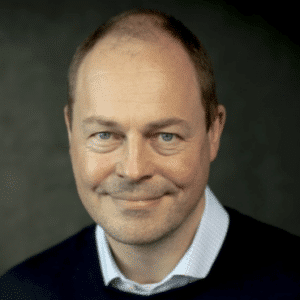
Boudewijn Thus, Managing Director, CSC EMEA Capital Markets
CSC EMEA Capital Markets Managing Director Boudewijn Thus looks back on a “tremendous” year in securitisation, while setting CSC’s sights on ambitions in the Middle East and the next wave of hot asset classes.
How would you characterise the past year for CSC’s securitisation franchise?
It’s been a tremendous year, above all because of the trust our clients continue to place in us. Three years ago when CSC acquired Intertrust, we set out to build a truly global organisation that could better serve arrangers, originators and investors across jurisdictions. The integration is now behind us and what we are seeing is clients increasingly leveraging our broader footprint and deeper expertise. Our European securitisation business has just delivered a record year in deal volumes, driven by clients expanding their programmes and launching new transactions with us.
Where is that growth coming from within Europe?
Our main hubs remain Luxembourg, Amsterdam, London and Dublin and those centres continue to support clients executing increasingly complex and cross-border transactions. Even in mature markets such as the Netherlands, we have seen clients innovate, for example Beequip completing its first public deal, a milestone that reflects the continued evolution of equipment leasing as an asset class. It is encouraging to see clients using securitisation not just as a funding tool, but as a strategic lever to grow their businesses.
What is behind the revival in more traditional “real asset” securitisations?
We are seeing clients return to real estate securitisations like hotels, exhibition and event centres, and commercial property. After a period of balance sheet repair, many are now focused on growth again. Securitisation allows them to recycle capital, strengthen their balance sheets and create new capacity. Our role is to help structure these transactions in a way that aligns with their long-term funding strategies and investor expectations.
Middle East as a new hub
You have also been investing in the Middle East. What is drawing you into that market?
Our clients are. Most of the arrangers, originators and law firms we work with have established or expanded their presence in the region. As a service provider, our priority is to be where our clients need us. We have therefore expanded our local team to ensure we can support transactions seamlessly, combining regional insight with our European experience.
Are you treating it as an extension of your European business, or as a future hub in its own right?
Increasingly we see the region developing into a hub in its own right. The UAE and Saudi Arabia are building sophisticated securitisation frameworks, and clients are keen to access both regional and international capital. Our role is to help bridge those markets and provide continuity across jurisdictions.
What are the predominant asset classes in those Middle Eastern deals?
Primarily SME financing and consumer loans, using securitisation techniques. What is notable is that the region has adopted many of the best elements of European and UK securitisation law and then added its own layer on top. For us, that is workable because we can support transactions both from our existing European offices and from our regional presence. It is becoming a genuine bridge between Europe and the Middle East – and that flow runs both ways.
How would you compare the regulatory approach there with Europe and the US?
They have consciously chosen to base themselves on European and UK frameworks rather than on the US model. The UK-style approach is slightly more pragmatic than the EU’s, but both are, by design, relatively strict and investor-protective compared with the US. The Middle Eastern regimes do not carry decades of legacy legislation, so they can pick and choose best practice. They are combining European and UK structures with some more US-minded elements, which is a smart way to position yourself for the coming decades.
Data centres, AI hardware and batteries
Let’s turn to some of the newer and more esoteric assets you are seeing. Data-centre related finance appears to be gaining traction, how real is that opportunity?
The opportunity is very real, and it is largely client driven. We are seeing originators and sponsors exploring how to finance the infrastructure underpinning AI growth – from data centre real estate to GPUs and battery storage. These assets are capital intensive, and clients are looking for efficient refinancing tools once projects are operational. Securitisation can provide that flexibility.
In Europe, we are now receiving concrete requests for GPU and battery financing transactions. Our focus is on adapting structures to European legal and investor frameworks so that clients can access funding in a sustainable and scalable way.
Are GPU and battery deals still theoretical in Europe, or are they actually happening?
They have already happened in the US, which is typically where these structures emerge first. In Europe, we are now seeing the first concrete requests for GPU financing transactions and for battery storage. The structures need some tailoring for European law and investor expectations, but they are entirely feasible. On the battery side, there are industrial-scale solutions linked to data centres and grids, and residential-focused deals where batteries are bundled with solar panels and heat pumps. We have participated in at least one such transaction and another is in the works.
Why is securitisation suddenly seen as a “hot” way to fund these assets?
I would not call it sudden. It has been on the horizon for years. Large-scale infrastructure and project finance always take time. It takes years to go from buying land, through permissions, construction and then to operations. Once assets are operating and generating rental or usage income, securitisation becomes an attractive refinancing tool. In the meantime, the cost and sophistication of components such as GPUs have risen to the point where dedicated funding structures make sense. So what has changed is not the concept, but that the growth of AI and renewables has accelerated the underlying demand.
Shipping, portfolios and the risk question
Beyond technology and energy, which other emerging or underappreciated sectors are you watching?
Shipping is another area where clients are proactively preparing for regulatory change. With the International Maritime Organization targeting climate neutrality by 2050, fleet owners and financiers are assessing how to fund retrofits and new vessels.
We are working closely with clients and colleagues across Oslo, London and Greece to explore how securitisation techniques can support that transition in a capital-efficient way.
How does this all sit within your overall risk profile? Are these emerging asset classes materially riskier than, say, mortgages or car loans?
The core of our business remains conventional, mortgages and car lease securitisations account for roughly 80% of activity. That reflects where client demand remains strongest and where investor appetite is deepest. The newer asset classes are growing, but they remain a complement rather than a replacement. Clients and investors alike apply portfolio discipline. Our role is to help ensure structures are robust, transparent and aligned with risk expectations.
You have hinted in the past that almost anything can be securitised if it has predictable cash flows. How far does that extend in practice?
The flexibility of securitisation is one of its strengths. We have seen transactions involving coffee vending machine receivables, wine portfolios, music royalties and more. Ultimately, if clients have predictable, contractual cash flows, there is often a securitisation solution that can support their funding strategy.
Synthetic deals, regulation and competition
How significant are synthetic securitisations in your business mix now?
It’s still a growing market, particularly in regions such as eastern Europe. Many of the deals there are synthetic or structured as significant risk transfer. Perhaps synthetics are an asset class in itself. For us, the key distinction is whether there is an SPV buying the risk or assets; if it is a purely bilateral arrangement between two banks, there is less for a service provider like CSC to do. Where assets or risk are transferred to an SPV, we can add value and we are seeing growing demand in that space. If regulators move further towards enabling more traditional, “true sale” securitisations, the opportunity set widens.
How do you assess the current European regulatory climate for securitisation more broadly?
I am positive, with one caveat. I would describe the glass as half full. Recent reports and policy discussions at EU level have become more supportive, recognising that securitisation has a role in financing the European economy, particularly given estimates of an additional €800bn of annual investment needed. The direction of travel is correct, but the pace is somewhat slow. That said, I would rather see carefully considered, durable reforms than rapid but unstable swings. As an industry, we are keen to contribute to the dialogue and to help shape a framework that supports sustainable growth.
Finally, how are you positioning CSC as competition intensifies and private equity-backed platforms push on pricing?
Competition is increasing, and that benefits clients. Our response is to invest in people, innovation and technology so that we can deliver consistent, high-quality service across jurisdictions. Part of our reinvestment goes into developing new structures that help clients access capital in evolving markets; another part goes into technology to improve efficiency and transparency. Ultimately, our ambition is simple: to be the most reliable long-term partner for our clients, combining global reach, independence and innovation with disciplined execution. The fact that clients continue to choose us in a competitive market is, for us, the strongest endorsement.
Register now
At the Securitisation Event 2026, market leaders explore how growth, regulation, new asset classes, AI, technology and data centres are reshaping Europe’s securitisation market. Expect concrete cases, practical insights and open debate across the full value chain. Join the largest annual Dutch securitisation platform and connect with the entire structured finance community.

Securitisation Event
The Securitisation Event, where more than 250 participants come together annually to discuss developments...
Download the brochure
Share